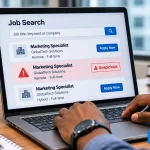



Seven out of 10 employers surveyed by the National Association of Colleges and Employers (NACE) said they use skills-based hiring for entry-level positions in 2026, up from 65% the previous year. The finding reflects a growing change in how companies evaluate candidates: a university degree is no longer the only evidence they want to see before making a hiring decision.
Instead of relying entirely on educational qualifications, companies are paying closer attention to practical abilities, work experience and how applicants handle tasks related to the position. Some are introducing technical tests, workplace simulations and practical assignments to establish whether candidates can do the work they are applying for.
This does not mean academic qualifications are losing their value. However, as employers encounter new skills shortages and changing job requirements, there is growing interest in recruitment methods that provide a clearer picture of what candidates can actually do.
Why employers are looking beyond university qualifications
A degree can demonstrate academic achievement, but it does not always establish whether someone is ready to perform a specific job. Two people with identical qualifications can have considerably different levels of practical experience and professional competence.
This becomes particularly relevant in occupations where proficiency with specific tools, systems and technologies is essential. A digital marketing candidate, for example, might have a relevant university qualification but limited experience interpreting campaign data, managing advertising budgets or improving conversion rates. Another applicant who acquired these abilities through professional experience may be better prepared for those responsibilities.
The problem extends beyond individual recruitment decisions. The Organisation for Economic Co-operation and Development (OECD), in its 2026 analysis of skills-first labour markets, found that more than one in three workers across participating countries reported that their skills were not fully aligned with their jobs.
The report identifies a disconnect between the skills people possess, those employers require and the way organisations identify qualified workers. Relying too heavily on academic credentials can make this problem harder to address, particularly when capable candidates have acquired their expertise outside traditional education systems.
Skills shortages are putting more pressure on recruitment
Technology is adding another reason to reconsider conventional hiring requirements. Artificial intelligence, cloud computing, data analytics and cybersecurity are changing the capabilities businesses need. Some of these skills develop faster than traditional academic programmes can accommodate.
The World Economic Forum’s Future of Jobs Report 2025 offers an indication of how employers are responding. Its survey found that 48% of employers expected to use pre-employment skills assessments between 2025 and 2030, compared with 43% who expected to use university degrees as a hiring requirement.
Work experience remained the most commonly identified assessment mechanism, at 81%. The figures describe employers’ expected recruitment practices rather than confirmed changes across the entire labour market, but they show how much attention is being given to practical evidence of competence.
In technology recruitment, this can be particularly important. A cybersecurity applicant may need to demonstrate an understanding of network security, vulnerability assessment and incident response. A qualification can provide evidence of formal training, but a practical exercise can show how the applicant approaches a security problem.
Companies also have reasons to widen their talent pools. Candidates acquire professional capabilities through apprenticeships, technical training, independent study, certifications and previous employment. Excluding them simply because they lack a particular degree can leave organisations overlooking people who could perform the work.
Employers are changing how they evaluate candidates
Skills-first recruitment involves more than removing educational requirements from job advertisements. It also changes what happens during the selection process.
Rather than relying exclusively on CVs and conventional interviews, organisations can ask applicants to complete exercises that resemble the responsibilities of the advertised position. These assessments provide an opportunity to observe problem-solving, technical knowledge and decision-making.
Common approaches include:
- Technical tests: Coding exercises, data analysis, software proficiency tests and cybersecurity challenges.
- Work samples: Writing reports, preparing financial documents, developing marketing plans or completing other role-related assignments.
- Workplace simulations: Responding to customer complaints, resolving operational problems or handling realistic business scenarios.
- Structured interviews: Answering consistent questions about previous work, professional decisions and demonstrated competencies.
- Portfolio assessments: Presenting completed projects and previous work to establish practical experience.
For instance, an organisation recruiting an administrative assistant could ask applicants to prepare a document, organize information or respond to a simulated customer enquiry. The assessment gives the hiring team something more concrete to evaluate than the candidate’s description of their abilities during an interview.
Companies are already putting skills-first recruitment into practice
IBM provides a notable example of a large organisation that has incorporated skills-based recruitment into its workforce strategy. The company began reviewing its degree requirements more than a decade ago, particularly in response to difficulties finding technology talent.
According to an OECD account of IBM’s recruitment approach, more than half of its US job postings no longer require a college degree. Approximately 20% of its US hires do not hold a college degree.
IBM also reported a 63% increase in applications from underrepresented groups following changes to its job requirements. The company has used this approach to consider candidates with relevant capabilities gained through different educational and professional pathways.
The example demonstrates that skills-first recruitment can involve a broader review of job descriptions, assessment methods and talent sourcing, rather than simply deleting a degree requirement.
Removing degree requirements does not guarantee fairer hiring
Despite growing interest, there is a considerable difference between announcing a skills-first recruitment policy and changing actual hiring decisions.
A 2024 study by Harvard Business School’s Project on Managing the Future of Work and the Burning Glass Institute examined whether companies that removed degree requirements subsequently hired more people without bachelor’s degrees.
The research found that many organisations made changes to job advertisements without achieving meaningful changes in their hiring practices. The study estimated that the progress made in expanding access amounted to fewer than one additional hire without a bachelor’s degree for every 700 hires examined.
More recent research suggests that implementation remains a challenge. A 2026 OneTen and Burning Glass Institute report, which analysed more than 1,000 major US employers, found that removing degree requirements was associated with only a two-percentage-point increase in the share of hires holding non-degree credentials.
This highlights a problem within recruitment systems. Hiring teams may continue to favour candidates with conventional qualifications because they lack reliable ways to evaluate alternative skills or remain accustomed to traditional screening methods.
There are also practical concerns about the assessments themselves. Poorly designed tests can introduce bias, create unnecessary barriers and place additional demands on applicants. The US Office of Personnel Management notes that developing and administering work-sample tests can be costly and time-consuming.
Assessments therefore need to reflect actual job responsibilities, use consistent scoring criteria and give candidates a fair opportunity to demonstrate their capabilities.
Degrees will remain relevant, but their role in recruitment is changing
Skills assessments are not suitable replacements for every academic or professional qualification. Medicine, nursing, law and other regulated professions require formal education, specialist training or professional licensing. Some technical and research positions also demand extensive theoretical knowledge that cannot be established through a short practical exercise.
The more relevant question is whether a degree is genuinely necessary for the responsibilities attached to a particular vacancy. Where professional competence can be established through work experience, technical assessments, recognised certifications or practical demonstrations, insisting on a university qualification may unnecessarily restrict the available talent pool.
For HR departments, this creates a need to review how job requirements are written and how candidates are evaluated. It also places greater responsibility on hiring teams to understand the competencies a position requires and distinguish between essential qualifications and traditional preferences.
The growing use of skills assessments points towards a recruitment process in which academic achievement, professional experience and demonstrated ability can be considered together. A degree may still open doors, but it is increasingly being examined alongside evidence of what a candidate can contribute in the workplace.