
More than two-thirds of business leaders surveyed in 2026 said removing formal performance reviews would either improve results or make no difference. Yet nearly seven in ten said their organizations still rely on annual or twice-yearly reviews.
The figures come from Betterworks’ 2026 survey of 934 HR and business leaders in the United States and United Kingdom. They capture a growing contradiction: leaders still want accountability, but many question whether the annual review is the best way to achieve it.
Work Changes Faster Than the Review Calendar
Annual objectives are often set against plans that do not remain unchanged. Projects are delayed, teams take on new responsibilities and business priorities are revised. An employee may spend much of the year delivering work that was not part of the goals agreed in January, then be assessed against those original targets in December.
Betterworks found that 59.6% of business leaders said priorities changed quarterly, monthly or continuously. Only 36.8% said employee goals were updated at a similar pace. That gap can leave performance management detached from the work it is supposed to assess.
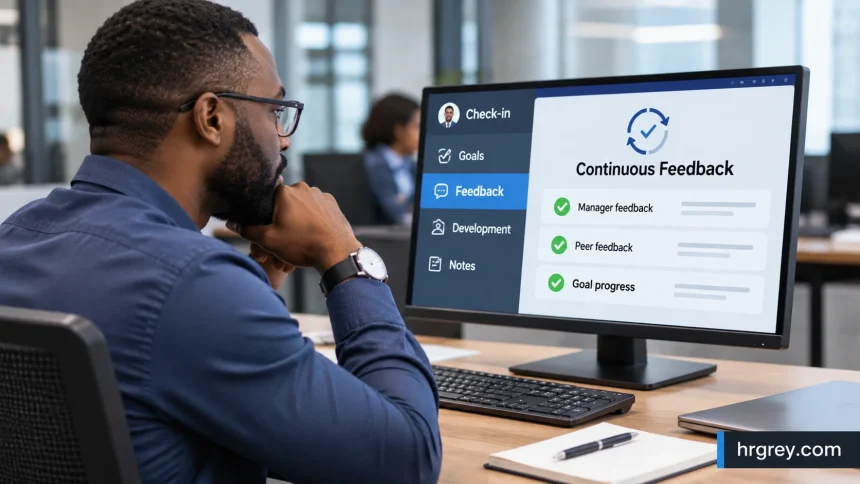
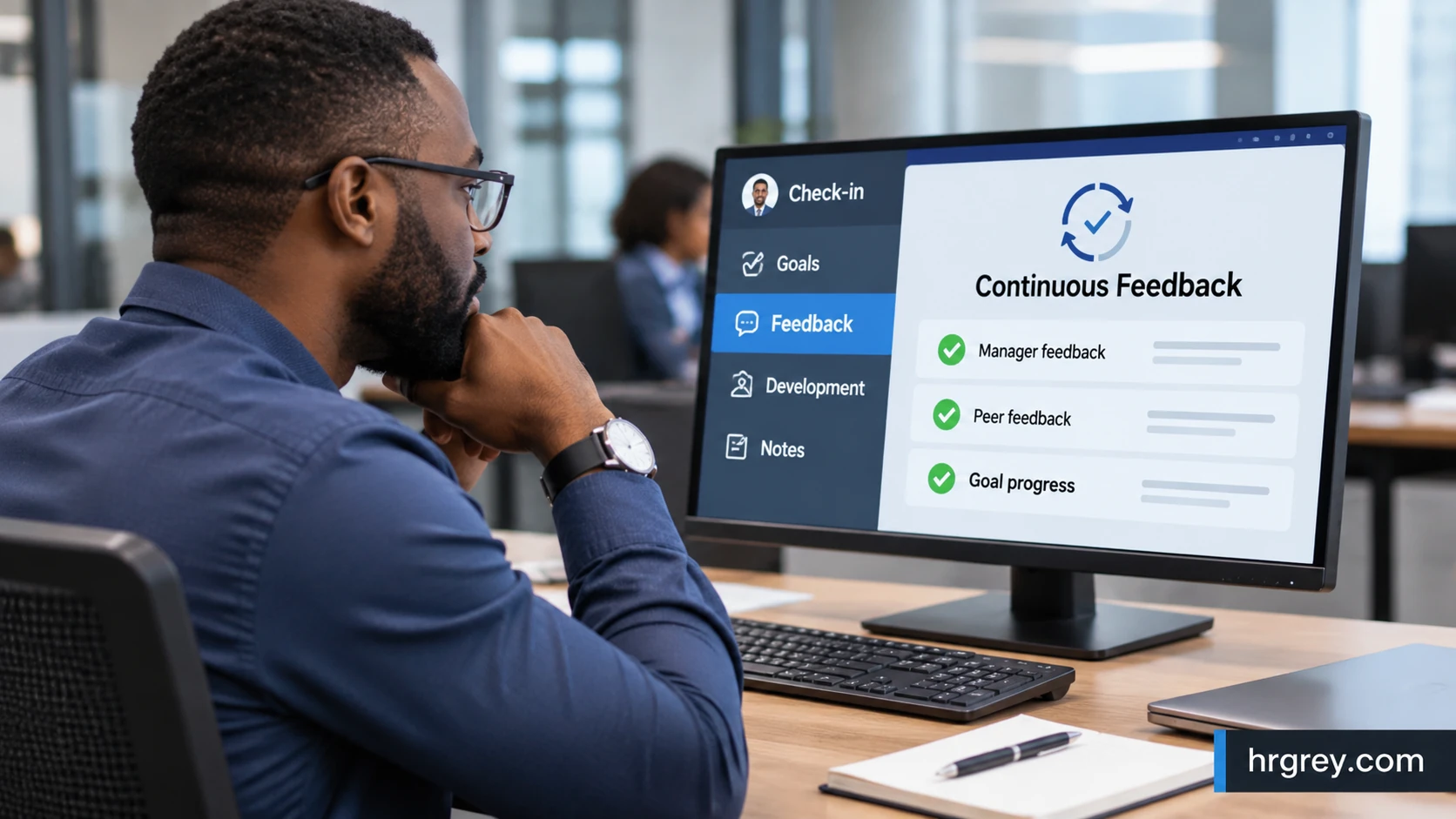
Regular check-ins let managers revisit expectations, identify obstacles and decide whether targets still make sense. Employees can raise problems before they appear in an end-of-year rating. Better records also reduce reliance on memory, though they do not remove bias.
Companies Are Changing the Purpose of Performance Conversations
Adobe replaced annual performance reviews and ratings with its Check-in approach in 2012. The company describes it as an ongoing, two-way conversation about performance and career growth. In its account of the Check-in system, Adobe said the change saved about 80,000 manager hours previously spent on the annual review process. That is a company-reported figure, not an independently measured outcome.
Yahoo provides a more recent example. It dropped twice-yearly evaluations in 2022 and moved to continuous check-ins. In an interview with Fortune, chief people officer Lisa Moore said managers set their own meeting rhythm, while twice-yearly talent roundtables allow leaders to discuss employee strengths, promotion readiness and concerns.
These examples show how day-to-day coaching can be separated from decisions about pay, promotion and accountability.
Annual Reviews Are Still Deeply Embedded
The evidence does not support claims that annual appraisals are disappearing. The Talent Strategy Group’s Performance Management Report, based on more than 250 organizations, found that 56.3% review performance once a year and another 36.1% do so twice a year. Only 7.6% review more frequently.
The report also found a gap between policy and practice. Although 47% of organizations encourage three to four formal feedback conversations during a performance cycle, 68.5% say employees typically receive only one or two. Many companies have adopted the language of continuous feedback without consistently making time for it.
Formal reviews remain important to compensation decisions. The report found that 82.5% of organizations link performance assessments to merit increases and 84.9% link them to short-term incentives. HR teams still need records and consistent standards when deciding pay or promotion.
A more realistic model combines regular conversations and goal updates with a formal assessment based on documented evidence.
More Feedback Does Not Automatically Mean Better Feedback
Continuous feedback can become another compliance exercise. If managers must schedule frequent meetings but have little time or training, employees may get more conversations without receiving useful guidance. Betterworks’ survey identified administrative burden and limited manager time among the obstacles leaders face.
Research also challenges the idea that feedback always improves performance. A 1996 meta-analysis by Avraham Kluger and Angelo DeNisi, covering 607 feedback intervention effects and 23,663 observations, found that feedback improved performance on average, but more than one-third of interventions reduced it. The authors suggested feedback can become counterproductive when it draws attention away from the task and towards the individual’s self-image. The findings are available in their research published in Psychological Bulletin.
Timing alone is not enough. Useful feedback is specific, linked to work employees can influence and clear about what should happen next. “Be more proactive” offers little direction. Explaining how a missed handover affected a project and what needs to change next time gives an employee something concrete to act on.
The Review Is Becoming a Checkpoint, Not the Whole System
Replacing an annual form with monthly meetings is not enough. Managers need support to set expectations, record meaningful examples and address problems early. Employees must also be able to explain obstacles and question outdated goals.
Formal reviews still have a place in pay, promotion and accountability decisions. They are more useful when they summarize evidence gathered throughout the year rather than reconstructing an employee’s contribution in one sitting.
The growing preference for continuous feedback is less about ending performance reviews than changing what happens between them. The annual meeting may remain on the calendar, but it is increasingly expected to confirm a picture built through regular conversations, not create that picture after the work is done.